


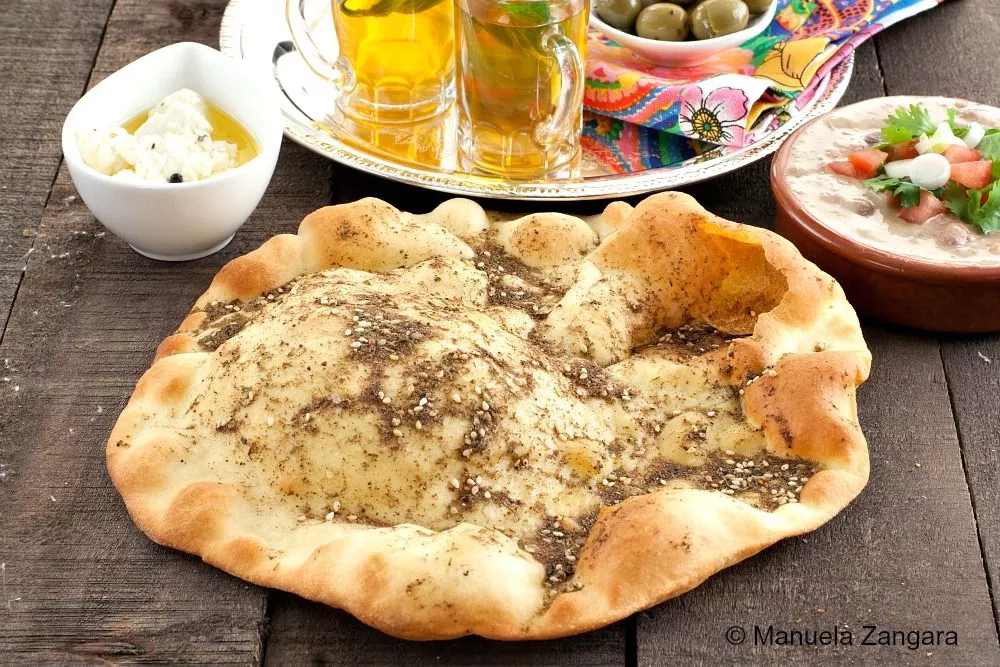
Soft, chewy Za’atar Manouche baked to golden perfection and brushed with olive oil for rich, herby flavour. A quick, flavourful Lebanese flatbread that’s simple to bake and perfect served warm.
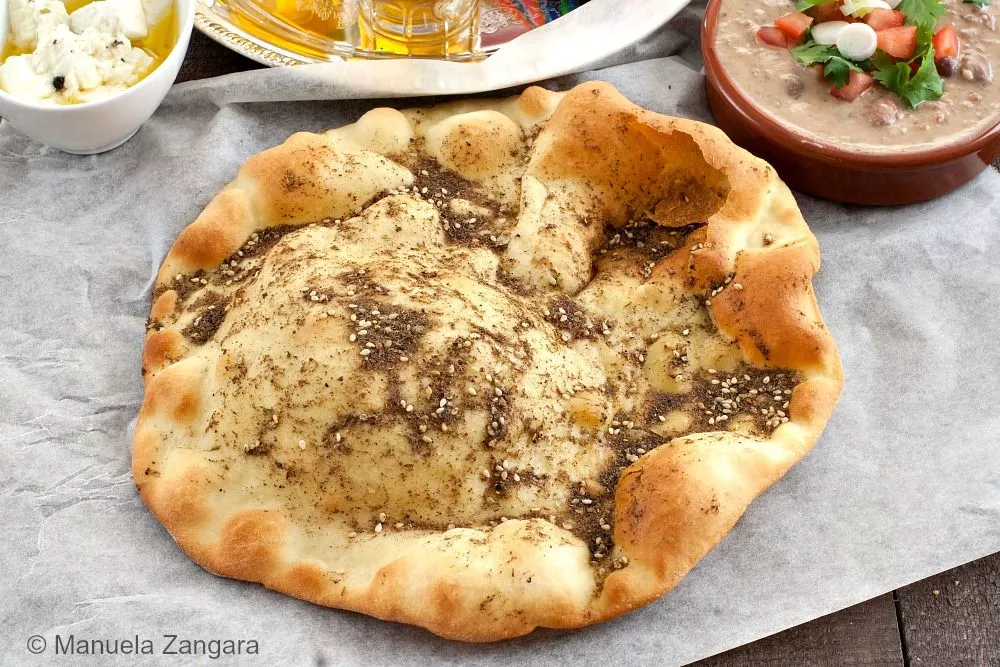
Manouche, also known as Manakish, is a popular Levantine bread topped with a thyme mixture (Za’atar), cheese, or ground meat. It is similar to a pizza, and it can be sliced or folded. It is often served for breakfast, which makes this bread perfect for the Middle Eastern breakfast I had to prepare for this month’s Daring Cooks challenge.
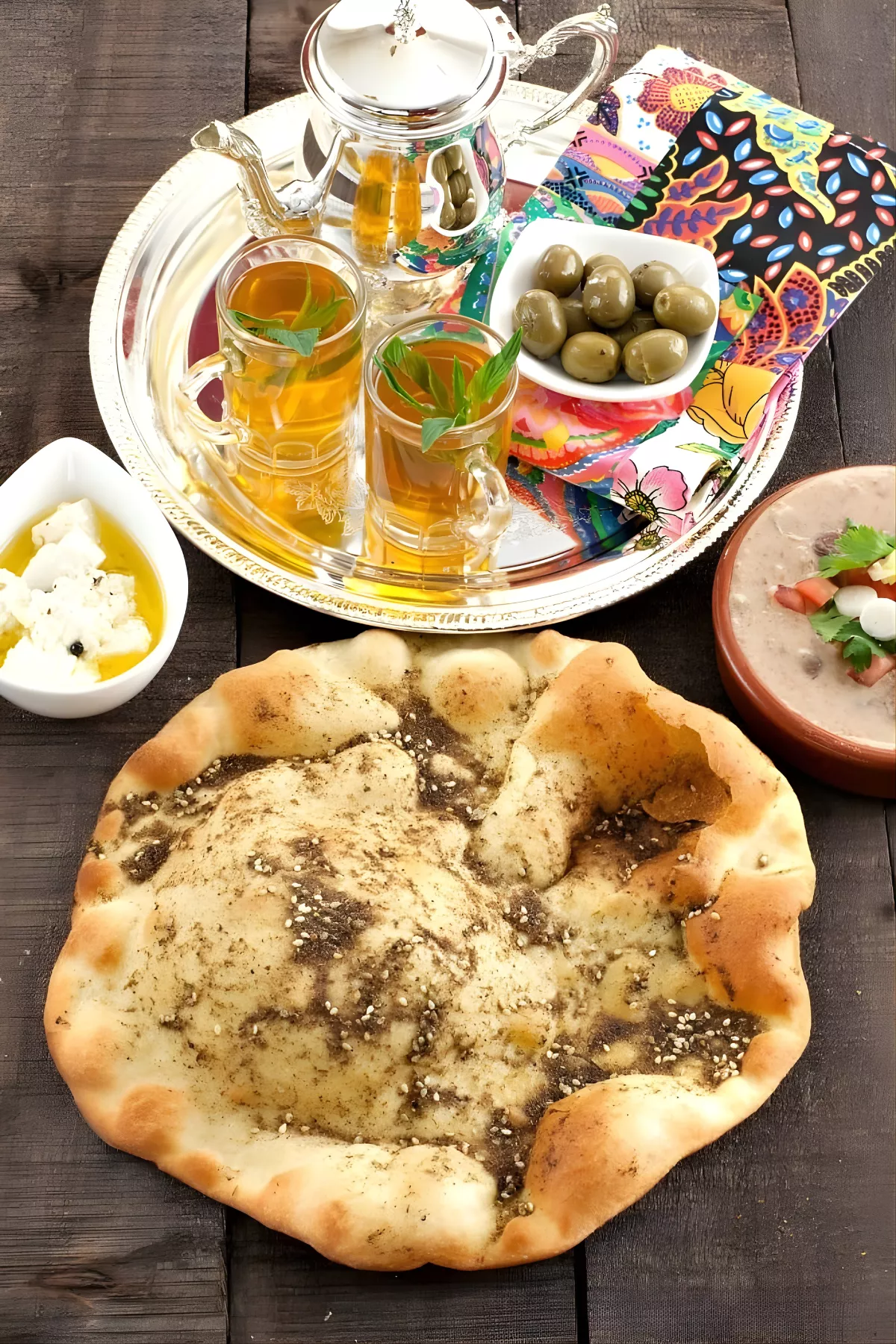
I have eaten amazing Za’atar Manouche here in Sydney, and after a few tries, I finally perfected my own zaatar manouche recipe for home baking. It is delicious, and the zaatar and olive oil bread mix on the top give it a hearty flavour.
Try it at home, I am sure you will love it. It goes very well with all Middle Eastern dips like Hummus, Labneh, Muhammara, and Ful Medames. Enjoy!
What Makes This Manouche Worth Baking Again
- Works well with a variety of toppings or dips such as hummus, labneh, or muhammara.
- Uses a handful of simple ingredients to create an authentic Middle Eastern flatbread.
- Delivers a soft interior with a light, crisp edge that makes every piece satisfying to tear and share.
Key Ingredients for Za’atar Manouche
Flour
Gives the bread its soft chew and structure. Bread flour provides more strength, while plain flour keeps it tender and light.
Yeast
Creates air pockets that give the Manouche its light, bready texture. Active yeast also adds mild tang and aroma once baked.
Extra Virgin Olive Oil
Adds depth and richness to both the dough and topping. Its flavour balances the sharp notes of za’atar and helps achieve a glossy surface.
Za’atar
A traditional mix of thyme, sesame, sumac, and salt that defines this bread. Its tangy, herby aroma gives each bite a savoury edge unique to Lebanese cooking.
Find the complete list with measurements in the recipe card below.
How to Make Za’atar Manouche
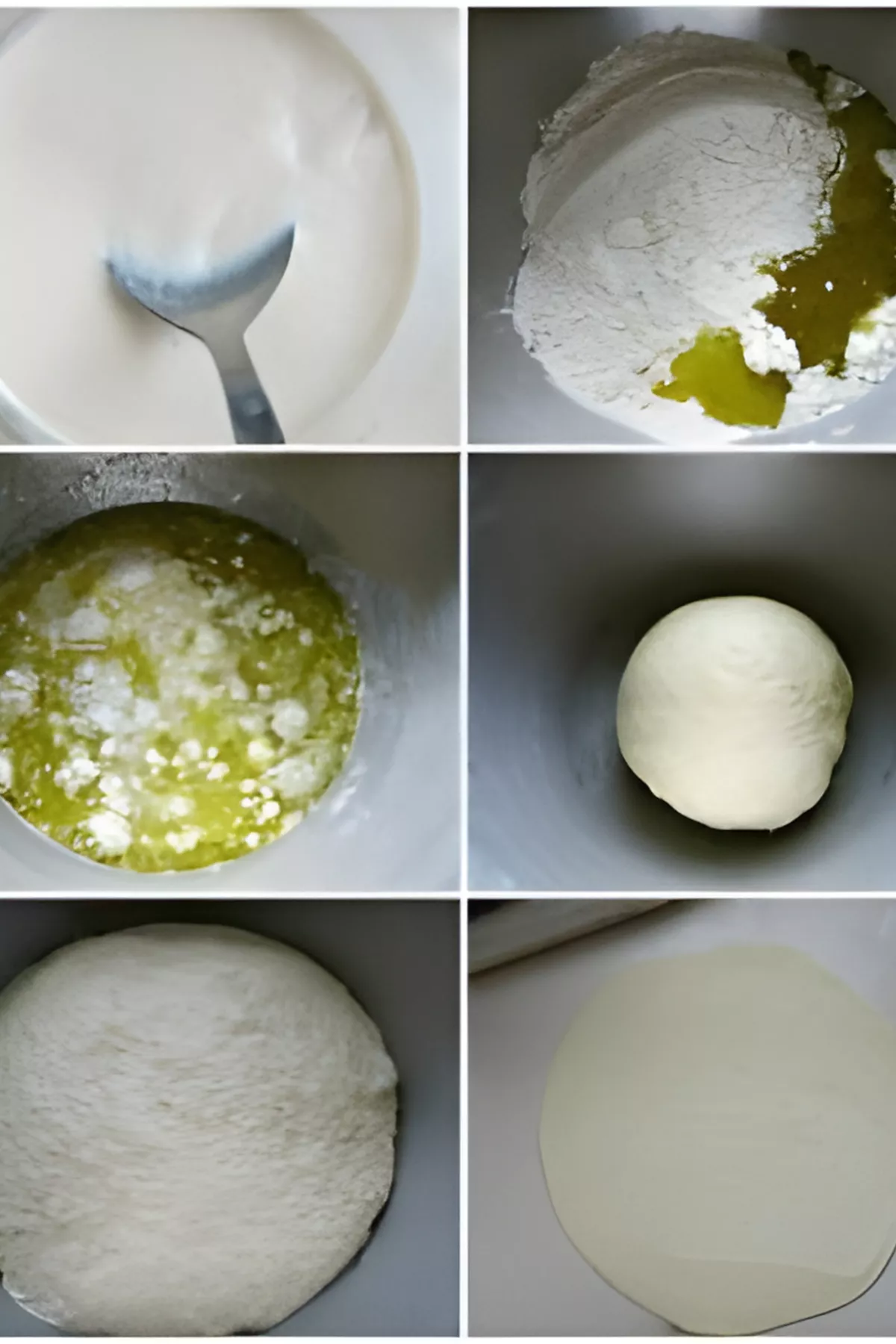
Step 1: Combine the lukewarm water, honey (or sugar), and yeast in a bowl. Stir well, then set aside for 10 minutes to activate.
Step 2: In the bowl of an electric mixer fitted with a dough hook, add the flour, salt, activated yeast mixture, extra virgin olive oil, and milk. Knead until the dough is smooth, elastic, and pulls away from the sides of the bowl.
Step 3: Transfer the dough to a greased bowl, turn it once to coat with oil, and cover it. Let it proof in a warm place for 1 hour or until doubled in size.
Step 4: Once risen, divide the dough into 3 equal portions and roll each one into a flatbread. Place them in greased 23 cm – 9 inch cake pans (with 2.5 cm – 1 inch sides).
Step 5: Bake in a very hot oven (230 °C – 450 °F) until the bread is puffed and golden. About 5 minutes before the end of baking, mix the za’atar with extra virgin olive oil and spread it evenly over the flatbreads.
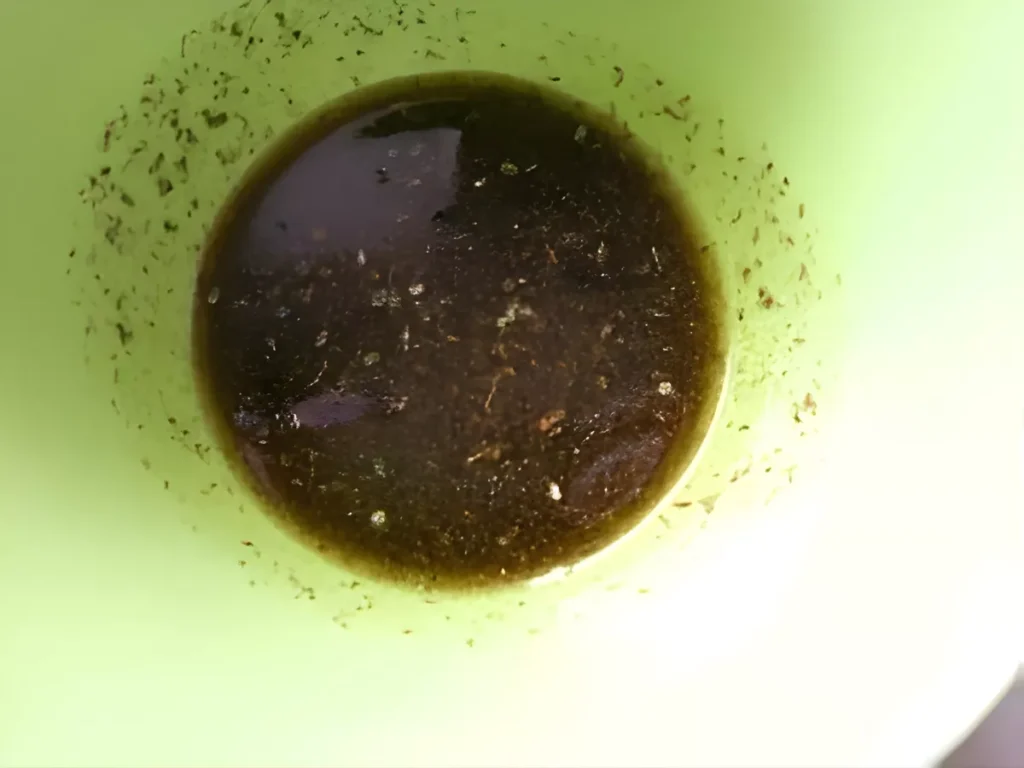
Step 6: Return the manouche to the oven and bake for another 5 minutes. Serve warm.
Frequently Asked Questions
Yes. Make the dough and let it rise once, then refrigerate overnight in a lightly oiled bowl. Bring it back to room temperature before shaping and baking so the yeast reactivates properly.
Yes. You can bake it on a lined baking tray instead. The edges will be flatter, but the texture and flavour stay the same.
A blend of bread and plain flour gives a good balance of chew and softness. Avoid using wholemeal alone as it makes the dough dense and heavy.
Yes. Freeze the dough after the first rise, wrapped tightly. Defrost in the fridge overnight, then bring to room temperature before rolling and baking.
Extra Help from the Kitchen
Use Quality Olive Oil – Good extra virgin olive oil enhances both the dough texture and the topping’s flavour. Low-quality oil can taste harsh once baked.
Check Dough Temperature – Dough that’s too cold rises slowly and becomes tough. Let it rest in a comfortably warm spot, not under direct heat.
Let the Dough Relax Before Rolling – Resting the dough for 10 minutes after dividing prevents it from shrinking back while shaping.
Variations and Twists
Cheese Manouche – Top the dough with shredded halloumi or akkawi before baking. The mild saltiness of the cheese complements the herby za’atar and creates a soft, melty layer.
Meat Manouche – Spread a thin layer of minced lamb or beef mixed with onion, cumin, and pepper before baking. The savoury topping transforms the flatbread into a filling, flavourful meal.
Za’atar and Cheese – Combine both toppings by brushing with za’atar oil first, then scattering cheese over the top. The cheese balances the herbs while keeping the bread moist.
Mini Manouche – Shape the dough into small rounds before baking. These are great for snacks, lunchboxes, or mezze platters, and bake faster than the full-size bread.
Vegan Manouche – Replace milk with water and honey with sugar. Serve with plant-based dips like hummus or baba ganoush.
Storage and Shelf Life
Store the baked Manouche in an airtight container at room temperature for up to 2 days. Keep away from direct sunlight or humidity to prevent the bread from drying out.
For longer storage, freeze the baked breads without topping for up to 1 month in freezer-safe bags or containers. Defrost at room temperature before adding fresh za’atar and olive oil. Reheat in a preheated oven at 180°C – 350°F for about 5 minutes, until warm and soft again.
Try These Freshly Baked Recipes
Za’atar Manouche Recipe (Lebanese Flatbread)
Soft, chewy Za’atar Manouche baked to golden perfection and brushed with olive oil for rich, herby flavour. A quick, flavourful Lebanese flatbread that’s simple to bake and perfect served warm.
Ingredients
Manouche
- 375 g – 3 cups all-purpose or bread flour
- 60 ml – ¼ cup extra virgin olive oil
- 1 teaspoon salt
- 140 ml – ⅔ cup lukewarm water or a bit more – as needed
- 40 ml – 2½ tablespoon milk
- 4 g – 1½ teaspoon yeast
- ½ tablespoon sugar or honey
Za’atar Mix
- 3 tablespoon Lebanese za’atar
- 60 ml – ¼ cup extra virgin olive oil
Instructions
-
Combine the lukewarm water, honey (or sugar), and yeast in a bowl. Stir well, then set aside for 10 minutes to activate.
-
In the bowl of an electric mixer fitted with a dough hook, add the flour, salt, activated yeast mixture, extra virgin olive oil, and milk. Knead until the dough is smooth, elastic, and pulls away from the sides of the bowl.
-
Transfer the dough to a greased bowl, turn it once to coat with oil, and cover it. Let it proof in a warm place for 1 hour or until doubled in size.
-
Once risen, divide the dough into 3 equal portions and roll each one into a flatbread. Place them in greased 23 cm – 9 inch cake pans (with 2.5 cm – 1 inch sides).
-
Bake in a very hot oven (230 °C – 450 °F) until the bread is puffed and golden. About 5 minutes before the end of baking, mix the za’atar with extra virgin olive oil and spread it evenly over the flatbreads.
-
Return the manouche to the oven and bake for another 5 minutes. Serve warm.
Recipe Notes
The baking time will vary depending on your oven and its temperature. I left mine in a little too long, and it turned out slightly brittle. Ideally, the manouche should be crisp around the edges yet soft enough to roll if you prefer it that way.

Love travelling as much as cooking?
Many of the recipes I share are inspired by places I've visited around the world. On Travel with Manu you'll find destination guides, itineraries and travel inspiration to help you plan your next adventure.


Hello, is there a way to make this with no oven? Can I “bake” the breads in a pan?
Hi Mina!
Yes, you can make this without an oven. Cook the flatbreads in a hot pan over medium to medium-high heat until puffed and golden on both sides.
Then spread the za’atar and olive oil on top and cook briefly again, or cover with a lid for a minute to warm it through. The texture will be slightly different but still very good.
Looks good except why so little zaatar? If you used 2 tablespoons for that bread, we’d use 12 !
amazing middle eastern dishes. love your blog